
Sun Prairie Address History Sources
No single roll names every person tied to a Sun Prairie address. The era decides the best first source. Access Dane and the deed index are strongest for the modern parcel and owner trail. The Sun Prairie Historical Museum & Library, called SPHLM, carries the trail into tax books, plats, phone directories, photographs, obituaries, and family files. Use the table as an evidence map, not as a claim that each source proves residence.
| Source | Years It Covers | Where Held | What It Shows |
|---|---|---|---|
| Dane deed index | January 1975 onward online | Register of Deeds | Recorded transfers, parties, document links |
| Village tax books | 1868-1949 | SPHLM | Taxed owner or parcel relationship |
| Telephone directories | 1920s-2007, weak early | SPHLM | Dated name and telephone listing |
| Plat maps and books | 1860s-2008 local; county 1873-2001 incomplete | SPHLM | Landholder and lot context |
| Assessor files | 1960s-70s archive; current online | SPHLM and city portals | Property descriptions, photos, sales, permits |
Start with the newest reliable fact. For a recent transfer, save the parcel number, legal description, and current recorded document. For a mid-century question, compare the phone-book year with assessor material and newspapers. Before street numbers existed, shift from the modern address to the legal land description, old owner names, plat, church, school, or nearby business. This keeps previous residents tied to the period in which each record was made.
Start a Sun Prairie Resident Trail
Enter the modern address in Access Dane. Its address form accepts house number, direction, street name, street type, and municipality. The result may show the PIN, legal description, current owner, primary address, billing address, assessment, tax facts, and recorded-document links. Save the PIN and legal description because both survive address spelling or numbering changes better than the street line.
Keep primary or situs address separate from billing or mailing address. A tax bill may go to an owner, agent, lender, or other place. That difference is a useful lead, but it does not prove where anyone lived. Assessor Data can add building facts, sketches, permits, and sales after an address is selected. The current owner is merely the first rung in a past-resident search.
See the blank Access Dane search controls in the official capture below. They show why spelling the street name without extra terms can help.
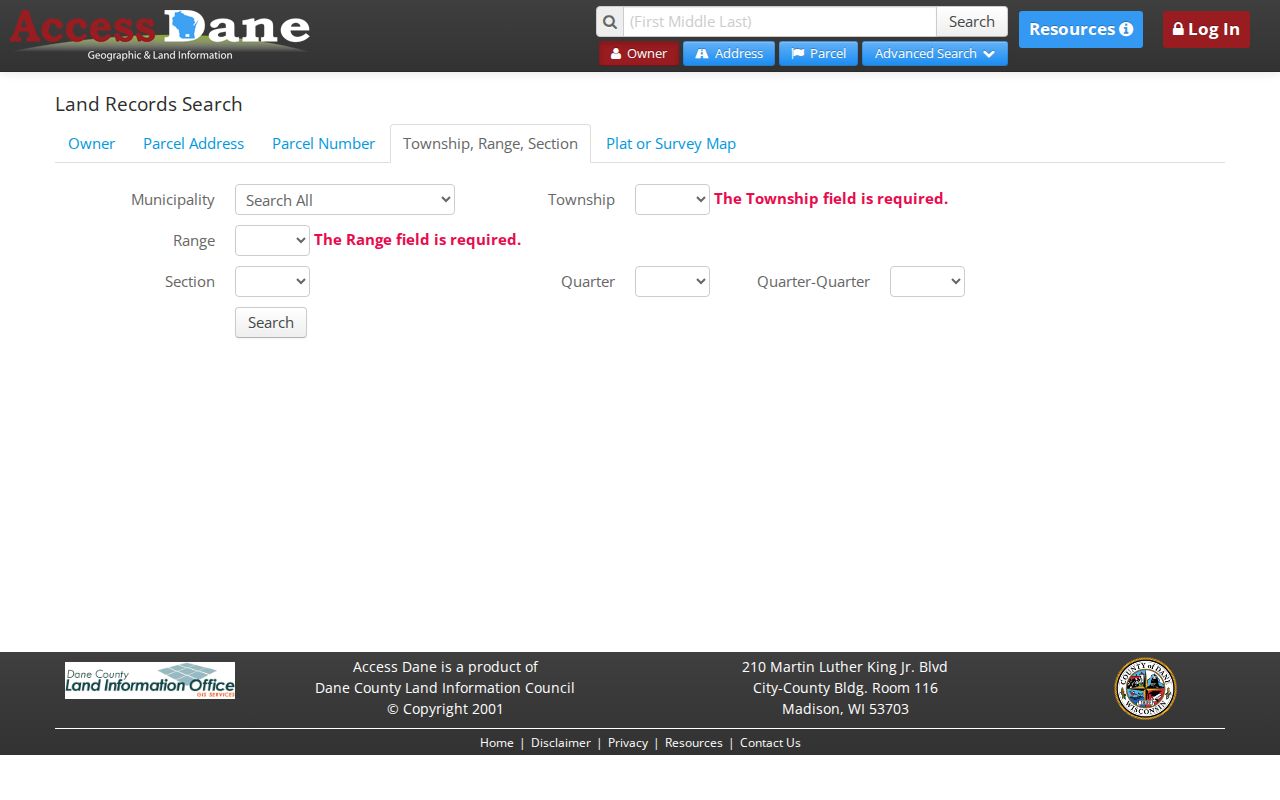
The owner, address, parcel, PLSS, and plat routes give several ways to recover when one address search fails.
Walk Dane County Deeds Backward
The Dane County Register of Deeds online search begins in January 1975, while older records continue to be back-indexed. A deed names the grantor, who gives an interest, and the grantee, who receives it. It also carries the legal description, parcel ID, recording date, and often the document or volume and page reference. That makes deeds the core owner chain for previous residents, but a deed alone does not identify every occupant.
- Copy the current owner, PIN, and legal description from the parcel record.
- Open the newest purchase deed through its recorded-document reference.
- Record the seller, then search that person or entity as a prior grantee.
- Repeat the link, checking that the legal description still matches.
- At the online cutoff, ask staff for older books, abstracts, or other archive routes.
- Grantor and grantee
- The party giving a property interest and the party receiving it.
- Chain of title
- The linked series of recorded transfers for the same land.
- Legal description
- The lot, plat, survey, or land wording that identifies property apart from its postal address.
The online route is not the only route. Register staff provide in-person viewing at 210 Martin Luther King Jr. Boulevard, Room 110, Madison, and answer questions at 608-267-8814. Copies may be bought through Tapestry, at the counter, or by mail with enough document detail, payment, and a self-addressed stamped envelope. The office estimates about two weeks for mail copies.
The Register screen used for occasional or account-based searching is shown below. The linked source explains the 1975 boundary and image access.
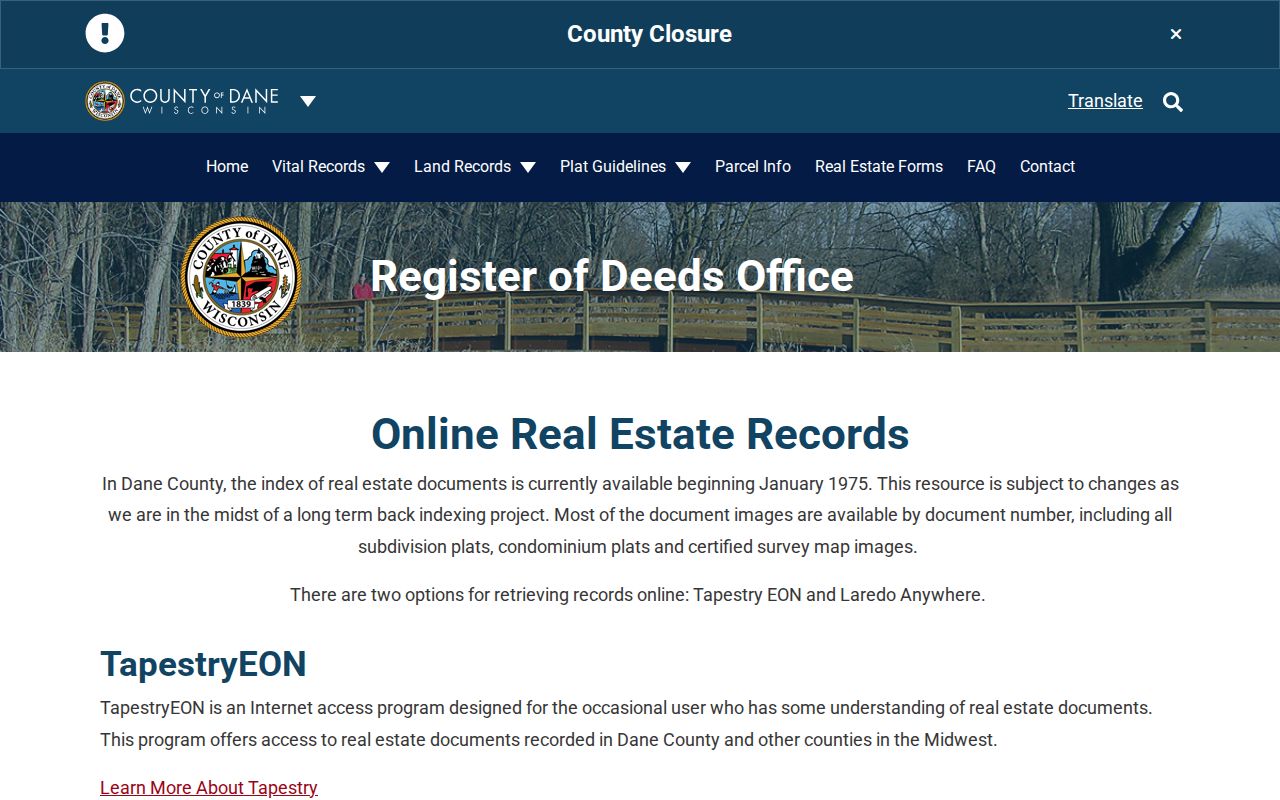
This screen is the handoff from a parcel result to the recorded papers that establish the owner sequence.
Previous Residents Before Street Numbers
Sun Prairie had no street or building-number system before 1950, according to the SPHLM collection summary. A search for today’s number can therefore miss every earlier record. This is a local records break, not proof that the property or household did not exist. Translate the parcel into its old plat, lot, farm, or quarter-section description, then search by an owner name, route, nearby landholder, school, church, or business.
The archive’s complete but not fully indexed village property-tax books for 1868-1949 are especially valuable here. They can bridge a landholder across years when a phone directory has no usable address. Early land patents from 1839-1855 and the local plat-map run from the 1860s through 2008 can carry the trail farther back. Record town, village, city, and postal labels exactly as found, since historical Sun Prairie does not always mean today’s city limits.
Note: A failed modern-address search before 1950 calls for a land-and-name search, not a guessed old street number.
Map Old Sun Prairie Buildings
Fire-insurance maps add the physical setting without naming every person. The Wisconsin Historical Society has a two-sheet November 1899 Sun Prairie Sanborn map, and the Library of Congress has a two-sheet December 1905 map. They show footprints, materials, uses, and street context. Compare the block shape and nearby landmarks with a plat or deed rather than forcing a current number onto the sheet.
A map confirms that a structure or use appeared at that date. It does not confirm who slept there. Pair it with a tax-book entry, directory line, census household, newspaper notice, or deed. SPHLM’s newer Featured Maps project also includes indexed plat maps from 1873-1926, a strong bridge between land and family names. These layers can explain why a previous-resident search turns up a business or farm description instead of a modern home.
Sun Prairie Archive Access Changes
The Sun Prairie Historical Museum & Library holds non-circulating source material at 115 E. Main Street. Its research service is free, but the research procedures say physical research and reproduction are paused or appointment-only while the archive is in storage. Call 608-825-0837 or 608-837-3449, or email museum@CityofSunPrairie.com, before planning a visit. A request should name the address or legal description, people, target years, and source types.
Online work can start in CatalogAccess, the obituary index, and Recollection Wisconsin. Nearly 9,000 of more than 35,000 holdings were searchable when the catalog launched in 2024, and records continue to be added. The captured catalog interface below shows the public starting point.
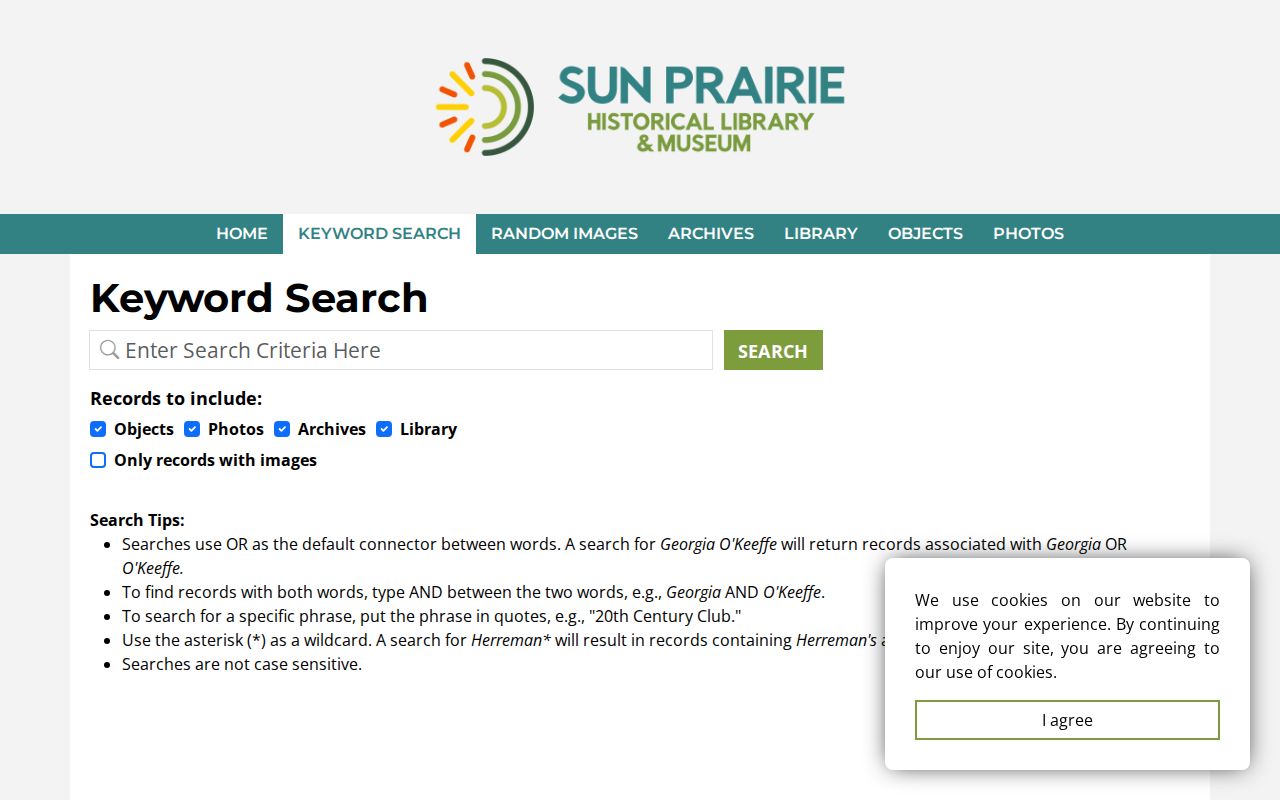
The catalog is a finding aid. A catalog record may lead to an item or staff request, while the physical archive contains much more than the online subset.
Check Sun Prairie Property Changes
Sales and occupancy can change at different times. Assessor Data may show building sketches, permits, and sales. City permit material can add an applicant, contractor, project, or date, but none of those fields alone proves who lived there. The city’s OpenGov permit page points to a public Locations search, while access to some records depends on an account email matching the applicant email.
When the portal does not expose an older permit, send a narrow request through the Sun Prairie public-records portal. Include the parcel, address, record type, and a date range, and ask for electronic delivery where available. Building Inspection can be reached at 608-825-1184. Planning records may be requested at planning@cityofsunprairie.com. In-person inspection at City Hall, mail, and contact with the named custodian remain valid access routes.
Pair Sun Prairie Household Records
Ownership is only half the past. Telephone books, dated directories, census schedules, school or church records, and newspapers can place people in a household or community at one point in time. SPHLM’s telephone run spans the 1920s through 2007 but is weak before the 1970s. Treat a listing as dated evidence, then compare it with the nearest census year and the owner trail. The Sun Prairie city directory collections explain the archive sources in more depth.
- Choose one deed, tax, or directory year and copy the exact name and place wording.
- Search the closest available census by surname, town, household, and nearby names.
- Compare spouse, children, age, school, church, or work terms only when the source supplies them.
- Move to the next dated source and mark any gap instead of assuming continuous residence.
Obituaries can close a household trail after someone left. SPHLM’s Benisch/Aldrich files cover eastern Dane County, so check the place before calling someone a Sun Prairie resident. Dane County probate has many records back to 1848; pre-1992 material is mainly on microfilm, with many pre-1930 duplicates at WHS. Search with a name and approximate death or document date, then request through the courthouse, mail, or the probate office.
Lawful use. Research previous residents for house history, family history, heirs, or personal curiosity. Never use an address trail to track, expose, or harass a living person.
Label Sun Prairie Resident Evidence
A clean result states what each record proves. A deed shows a transfer. A tax book ties a name to taxable land. A billing address tells where a notice went. A phone book gives a dated listing. A map shows a structure or lot. A census identifies a household within its date and geography. None should be silently upgraded into proof of current residence.
Store the source URL or call number, record date, access date, municipality, place label, and relation shown. Write “index only” when no image was checked, and “request required” when staff must retrieve the item. This matters in Sun Prairie, where town, village, city, ZIP, and wider eastern Dane labels overlap. It also prevents two people with the same name from being merged.
Can a no-result prove nobody lived there? No. An unindexed tax book, missing directory year, spelling change, different municipality, or pre-1950 numbering gap may hide the record. Report the gap and the exact search tried.